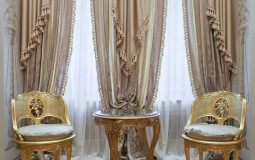
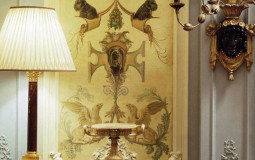
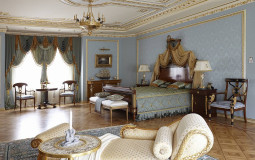
The restaurant is in the style of the Italian Renaissance
For flourishing of the restaurant business, it is essential that the premises to have its zest. This is why it has been decided to decorate the restaurant in the heart of Germany in style of Italian Renaissance. But it has been decided not to reproduce historical interiors, but to use different techniques developed by the architects of the past, including ceiling painting, stucco moldings, majestic wood paneling. As a result, it has turned out to be one-of-a-kind and exclusive in style.
Cozy Grandeur
Good kitchen is of utmost importance for the restaurant, however interior decoration cannot be taken to the background. For the private family restaurant, it was necessary to choose the decoration that would accentuate the high status of the establishment, but will be at the same time cozy attractive. It is not a secret that people come to the restaurant not only to eat and enjoy the decoration, it is important to them to spend good time in the comfort.
Years-proved classics has given the luxury and comfort, refinement and coziness.
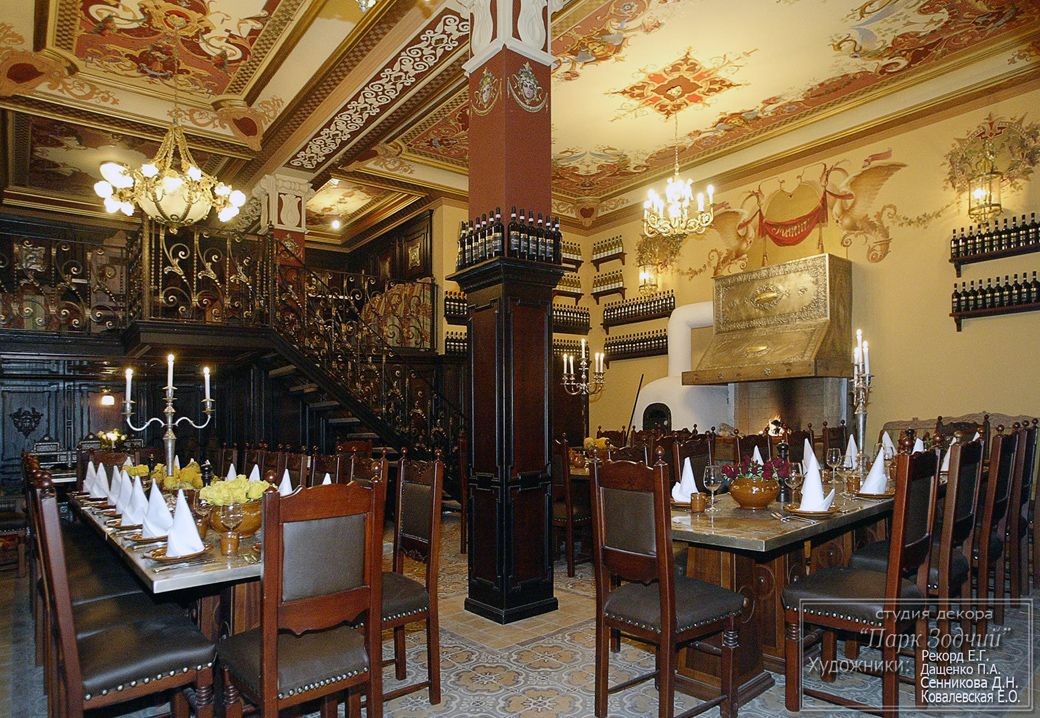
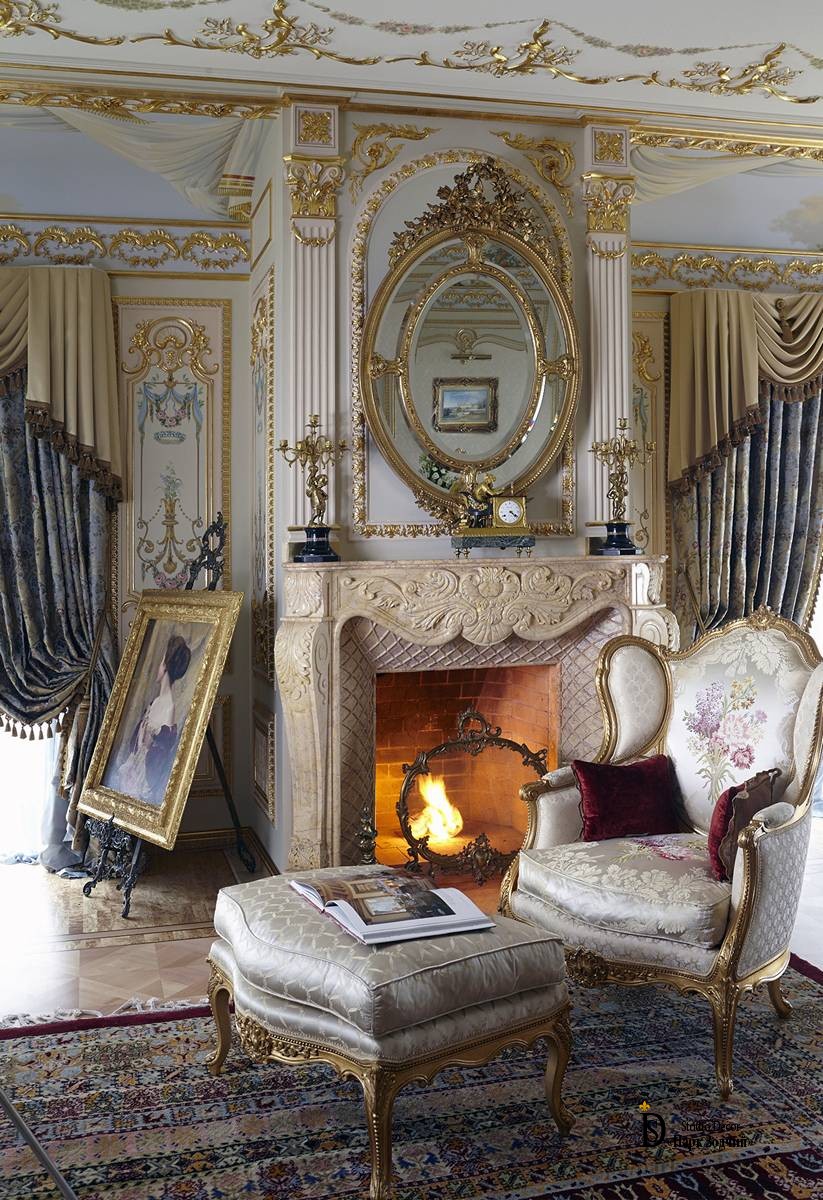
Fire in the fireplace always gives a feeling of calm. It has been also decided to enter it into the Interior, but it was used in an unusual way: hood of the fireplace with delicate decorative “lace”, the upper part is decorated with painting, corresponding to the age of Renaissance.
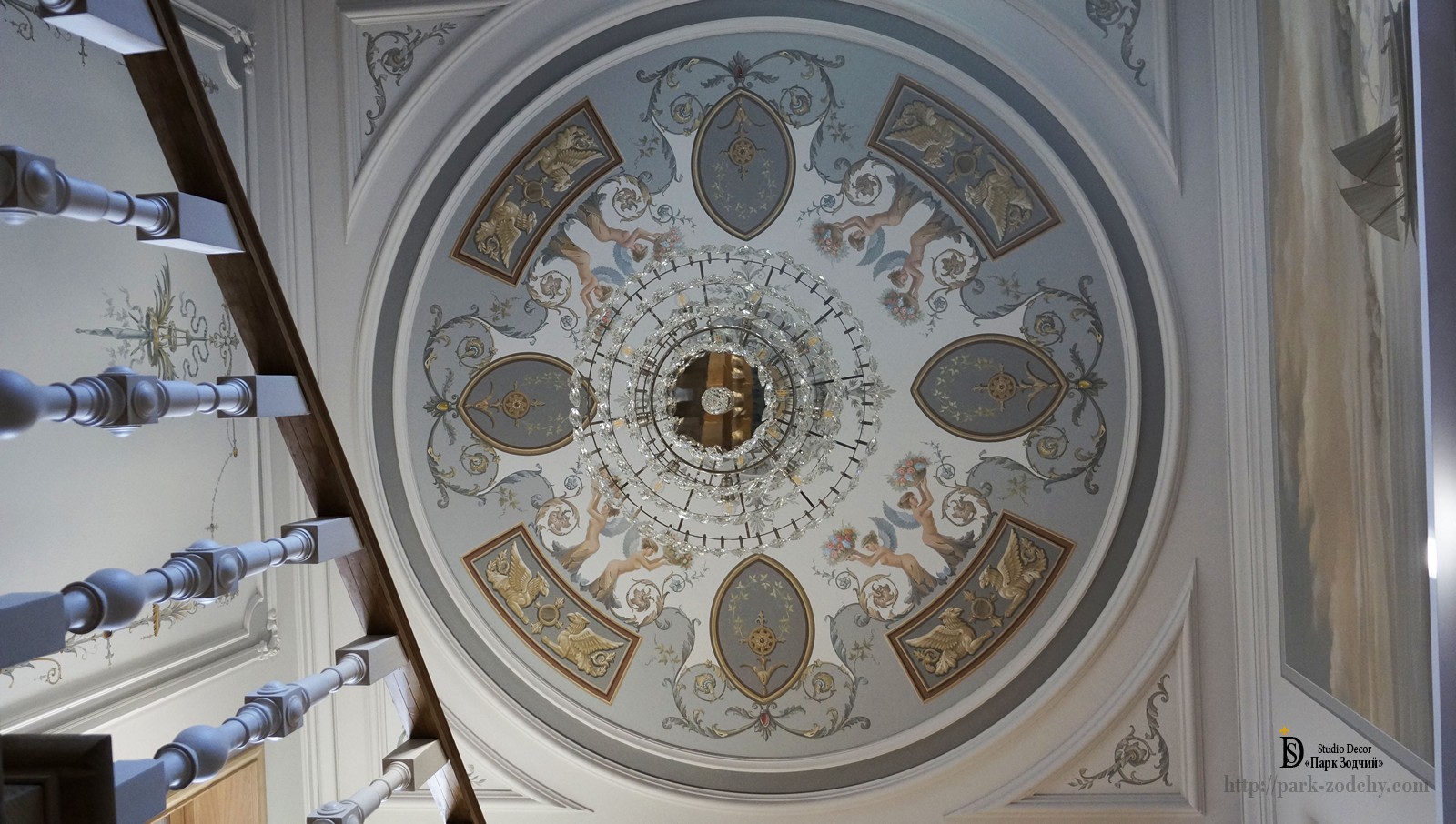
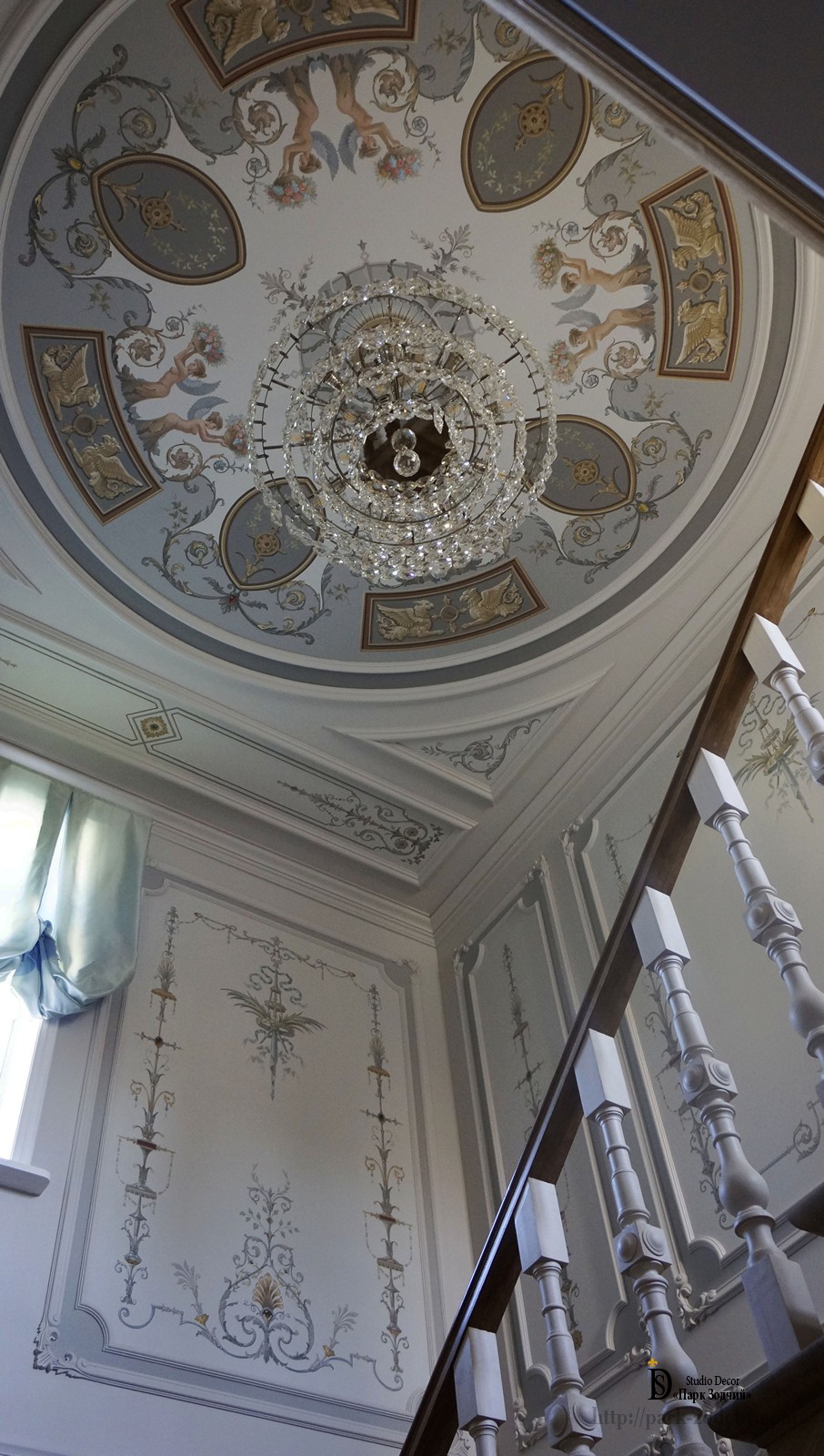
Color design is quite complex, but it also works to create a certain mood and unforgettable “spirit” of the restaurant. Contrast painting that has given color load to the ceiling is graceful in its own way. It has visually “lowered” the ceiling and given the premises comfortable proportions. Colors echoed with walls and more light theme of painting on them.
Rich painting of the ceiling is balanced with light floors. Printed tile is fine, harmoniously complements the color scheme of the premises, but also has purely utilitarian advantages. Made in Egypt, tile has thickness of 2 cm. This makes it resistant to wear and irreplaceable in the premises of intensive use. It is not wear out for years and does not lose relish.

Classics of The Genre
Duplex premises. A wrought-iron staircase has become a character element and extra embellishment of the premises. Twisted handrail parts greatly harmony with the painted ceiling.
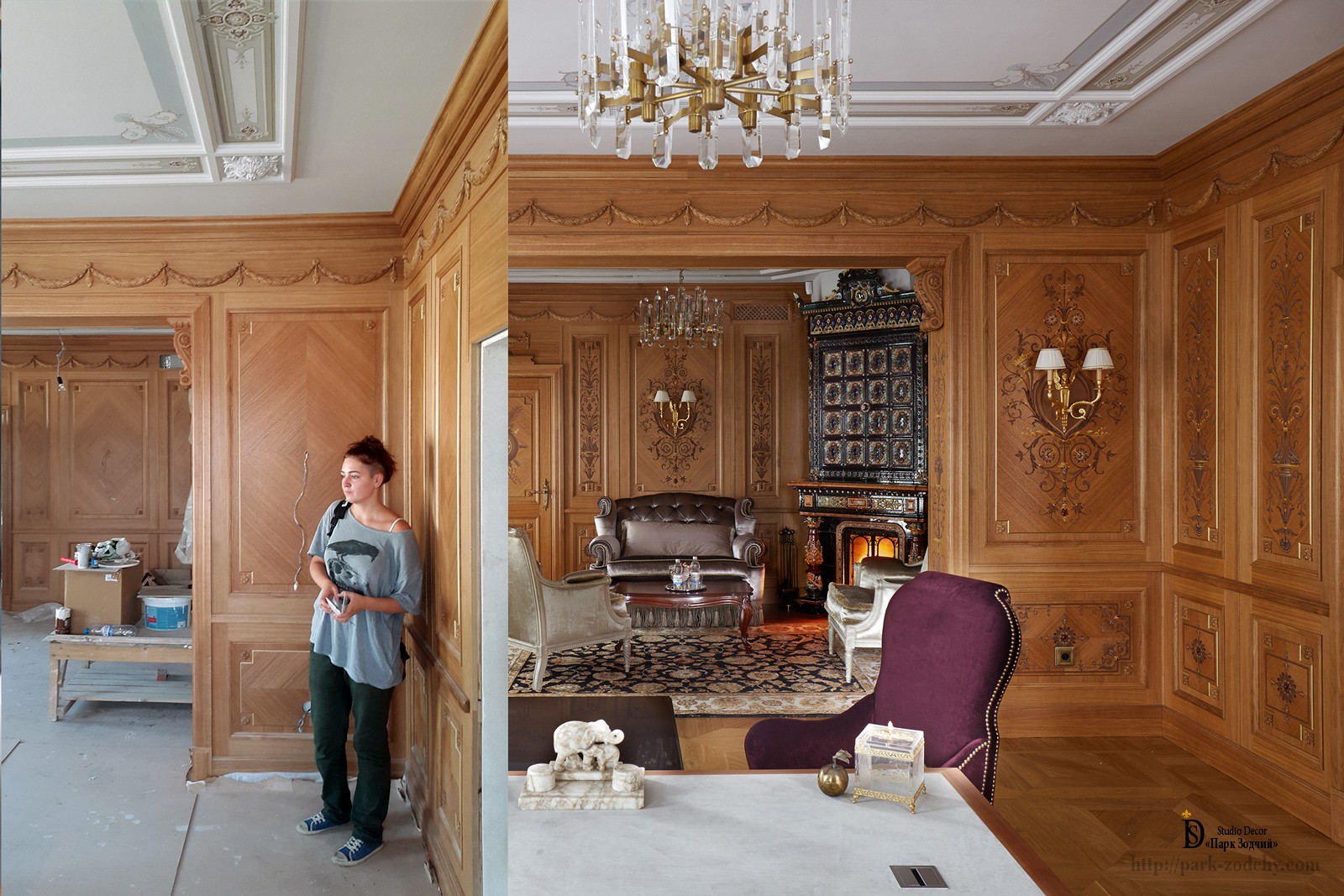
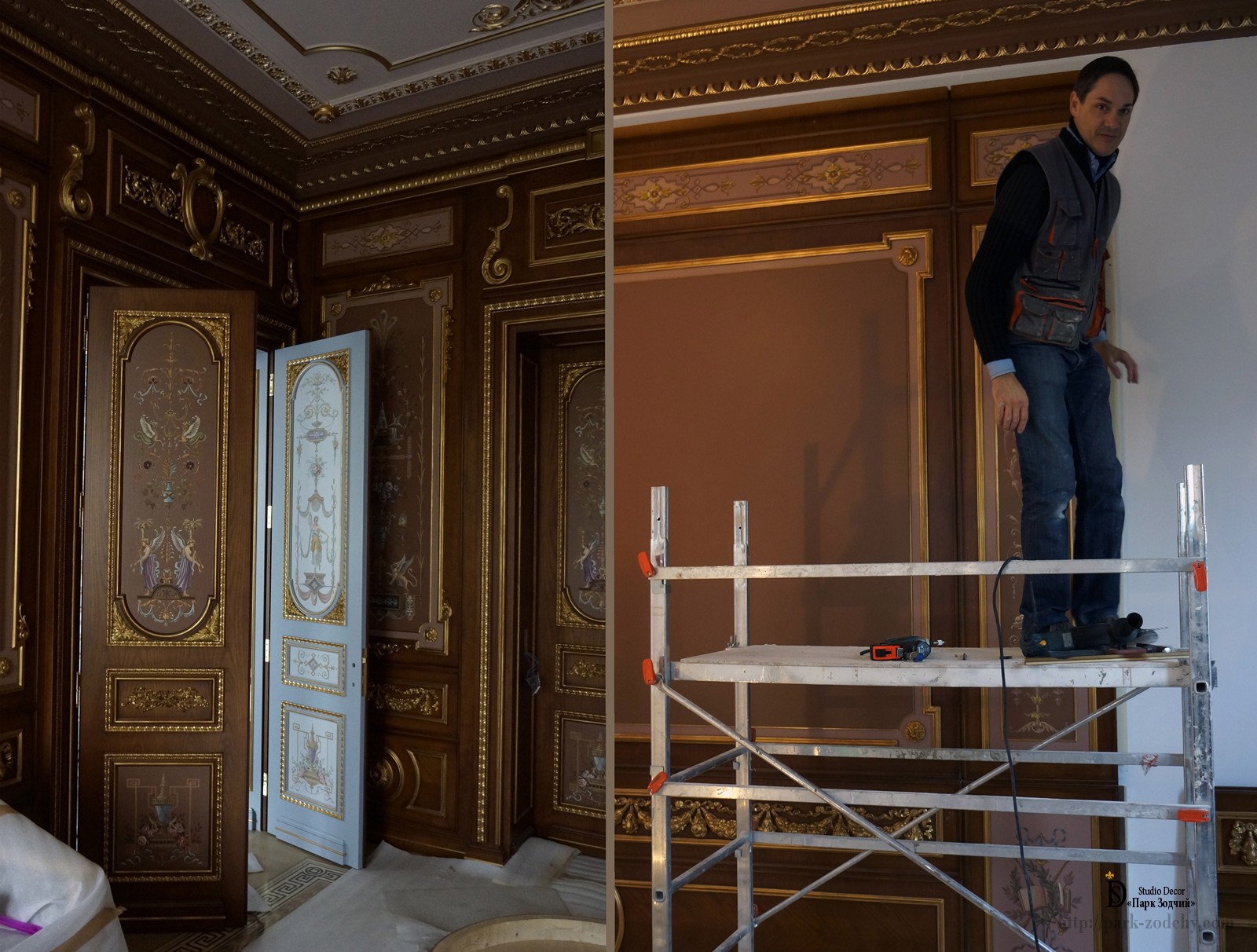
Wood-paneled walls can seem too dark because tinted in bog oak color. However, chandeliers, wall bracket lamps and candlesticks are placed in a special way and give soft, but sufficient lighting and soften dark walls.
Different-form lamps emphasize zoning: chamber-type in the main hall and more cozy on the second floor. As a result, the Interior not only attracts attention, but it is pleasant to spend time at the restaurant and makes wishing to come back again.







 2
2  2005
2005  Berlin